Roof Flashing Repair in Meridian, Idaho
Roofs leak at flashings and valleys first. The field is usually still alive.
Free estimate.
- Free estimates
- Treasure Valley
- Local crew
- One number
This job covers
- Step flashing at sidewalls on two-story pop-outs
- Closed-cut and open metal valleys on laminates
- Dead valleys behind two-story bump-outs
- Kick-out flashing at the eave-to-wall corner
Roof Flashing Repair in Meridian, Idaho
Meridian Quality Roofing does roof flashing repair in Meridian at the details that actually leak. Step flashing, kick-outs, pipe jacks, chimney crickets, and dead valleys fail before the field does. Production 2000s houses leak there first.
Call (208) 759-1550 with the town and whether water shows at a wall, a pipe, or a valley. We open the detail, not the whole plane, unless the deck next to it is gone.
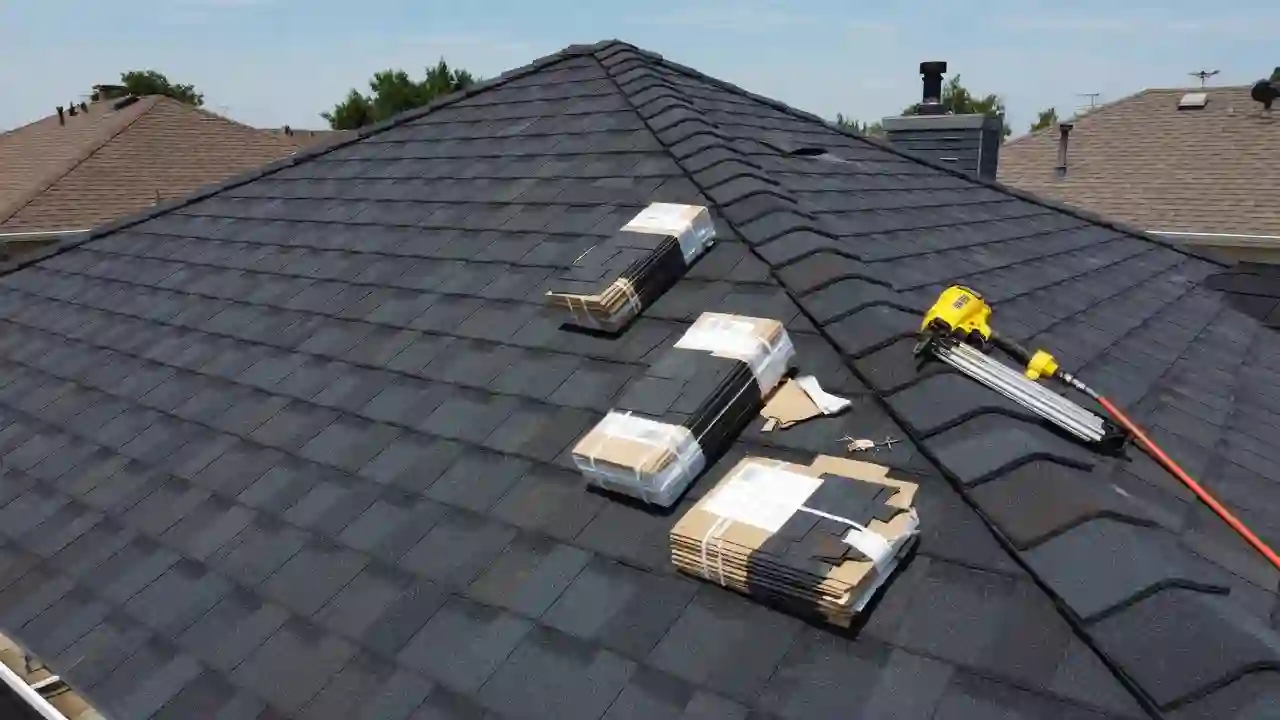
Flashing and Valleys Options for Meridian Properties
Step flashing at sidewalls on two-story pop-outs
Each course gets its own L of metal, woven, not a long pan stuck behind siding. We pull siding enough to do it, or we work with the siding trade. Tar at the wall is not step flashing. South Meridian pop-outs are the volume of this repair.
Closed-cut and open metal valleys on laminates
Closed-cut looks clean and UV-kills the cut edge. Open W-metal sheds debris better in pines. We pick from the existing, the pitch, and how much junk the valley collects. Granules in a packed valley are a clog, then a leak.
Dead valleys behind two-story bump-outs
Water hits a wall with no outlet. We add a cricket, raise a pan, or rebuild the dump so it reaches a gutter. This is the leak people paint three times in the bonus room. The paint is not the flashing.
Kick-out flashing at the eave-to-wall corner
Where a roof dies into a wall at the gutter, a kick-out throws water out. Missing kick-outs rot siding and then the plate. We add them in painted metal. It is a small piece. It saves a wall.
How We Handle Flashing and Valleys in Meridian
- We find the wet wall or bay, then the detail that feeds it: step, valley, boot, or kick-out.
- We lift only the courses needed. Siding that blocks counter flashing gets a note if we cannot pull it.
- We replace metal, boots, and rotten felt. Soft OSB at the wall comes out in that opening.
- We re-weave shingles and test with a hose while someone watches the attic or the wall cavity.
- We leave the kick-out visible. Hidden kick-outs get buried by the next painter.
Materials and Methods
Flashing metal is galvanized, aluminum, or pre-painted to match. Step is woven. Counter covers the step. Apron at the front of a chimney, cricket on the high side, and a pipe jack with a real collar at each penetration. Ice-and-water under valleys and along walls.
Valley metal and step flashing are galvanized or pre-painted steel. Ice-and-water in the valley is ASTM D1970. Underlayment in the field is ASTM D226 Type II or a synthetic the shingle maker allows. NRCA step-and-counter details. Pipe jacks with a real collar. Kick-out at the wall-to-eave. We weave step with the shingle course. A bead of caulk is not a counterflashing.
We bend kick-outs on site so the throw matches the gutter. Off-the-shelf L that dies into the siding is how the last leak started. NRCA flashing details are the trade drawings we work from. They are not a certification of this brand.
What Roof Flashing Repair Costs in Meridian
Fixr publishes flashing repair at $200 to $600 and valley leaks at $300 to $1,500. HomeAdvisor lists flashing issues around $200 to $500, with some jobs $150 to $1,000. Pitch, stories, and rotten deck at the wall are the movers. A chimney cricket is not a pipe boot. Call for a quote on the detail we open.
Production pop-outs from the 2000s put a short roof against a tall wall over a bonus room. That geometry is why flashing work is its own page. We carry painted metal so the kick-out is not a shiny scar. Chimney aprons and crickets are flashing even when the homeowner searched valley. Skylight curbs are flashing even when the search was leak. If three details are open on one house, the bid lists each. A single line that says "fix leak" is how the last caulk job failed. We name step, valley, boot, or kick-out in the scope so you can see what you are buying.
Flashings and valleys on Meridian production pop-outs
Most Meridian leaks are not a bald field. They are step flashing, missing kick-outs, pipe jacks, and dead valleys behind two-story pop-outs on 2000s plats. A short roof dumps into a tall wall over a bonus room. Water has nowhere honest to go, granules clog the pocket, and the wall cavity wets while the street view still looks fine. We open the detail, weave real step and counter, and add a kick-out that throws into the gutter instead of into the siding.
Valley wind drives rain into open step and under lifted tabs at the wall. Freeze-thaw pries weak sealant that was used instead of metal. Closed-cut laminate valleys UV-kill the cut edge and pack with debris. Open W-metal sheds better under pines but still needs ice-and-water under the metal. Chimney aprons and skylight curbs are flashing work even when the search said valley or leak.
We lift only the courses we need. Soft OSB at the wall comes out in that opening. A flashing job can grow into deck work. We say so when we see black sheathing. Architectural fields around the detail usually stay. Full strip is for when the field is spent, not for every kick-out.
Call (208) 759-1550 with the town and whether water shows at a wall, a pipe, or a valley. We name step, valley, boot, or kick-out in the scope so you see what you are buying.
Questions
Where do flashings fail on Treasure Valley production houses?
Step flashing at sidewalls, missing kick-outs at the eave-to-wall, pipe jacks, and dead valleys behind two-story pop-outs. Those details were rushed on 2000s plats. The field can look fine while the wall cavity is wet.
What is a dead valley?
A valley that dumps into a wall or a low cricket with nowhere for water to run. Production pop-outs create them. They clog with granules and pine needles, then they leak. The fix is metal, slope, and sometimes a rebuilt cricket.
Do you replace step flashing or just caulk it?
We replace it. Caulk on a sidewall is a season. Step flashing weaves with the courses. Counter flashing covers the step. Kick-out at the bottom throws water into the gutter. That is the system. Name the town and the job when you call.
What does roof flashing repair cost in guides?
Fixr lists flashing repair at $200 to $600. HomeAdvisor puts flashing issues near $200 to $500, with a wider $150 to $1,000 span. Valley leaks in Fixr run $300 to $1,500. Stories, pitch, and rotten deck next to the wall move it.
Can flashing work be done without a full reroof?
Yes, when the field still has life. We lift courses, swap metal, and re-weave. If the OSB at the wall is black, that bay comes out too. A flashing job can grow into deck work. We say so when we open it.
Why are pop-out dead valleys so common here?
Production two-stories from the 2000s put bump-outs and bonus rooms under short roof runs that die into a wall. That geometry clogs and leaks. The fix is metal, slope, and sometimes a rebuilt cricket, not another tube of caulk.
Will fixing flashings stop freeze-thaw eave leaks too?
Only if the eave is the path. Kick-outs and step fix wall dumps. Ice dams at the drip need ice-and-water and attic intake. We diagnose which path you have before we sell one detail as a cure-all.
Ready for a roofing estimate in Meridian?
Replacement, repair, storm. Free estimate, no obligation.